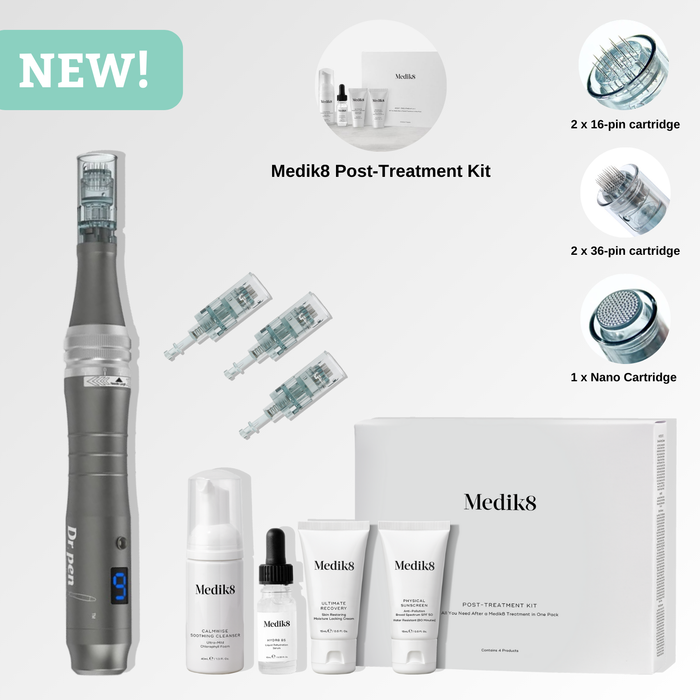
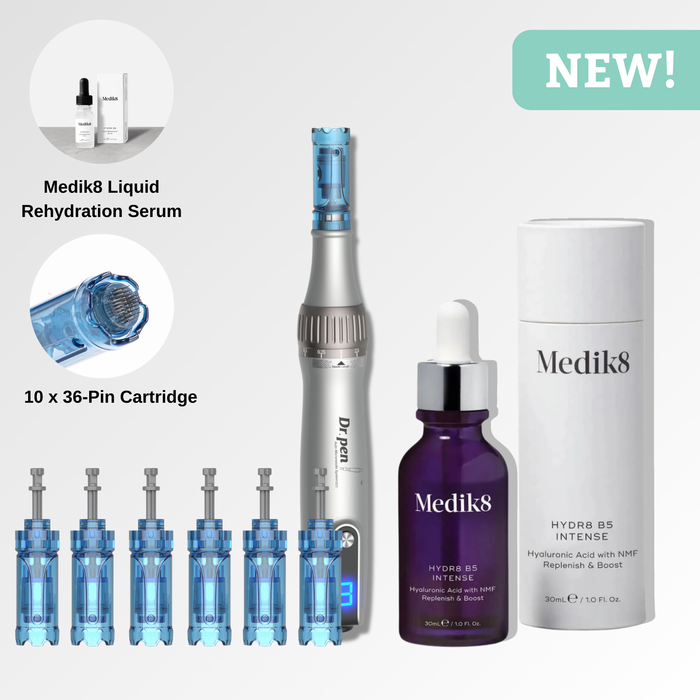
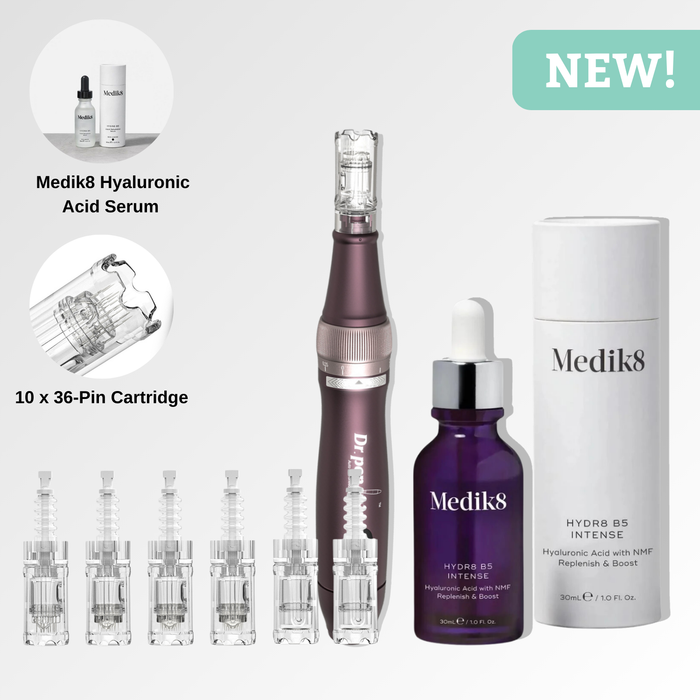
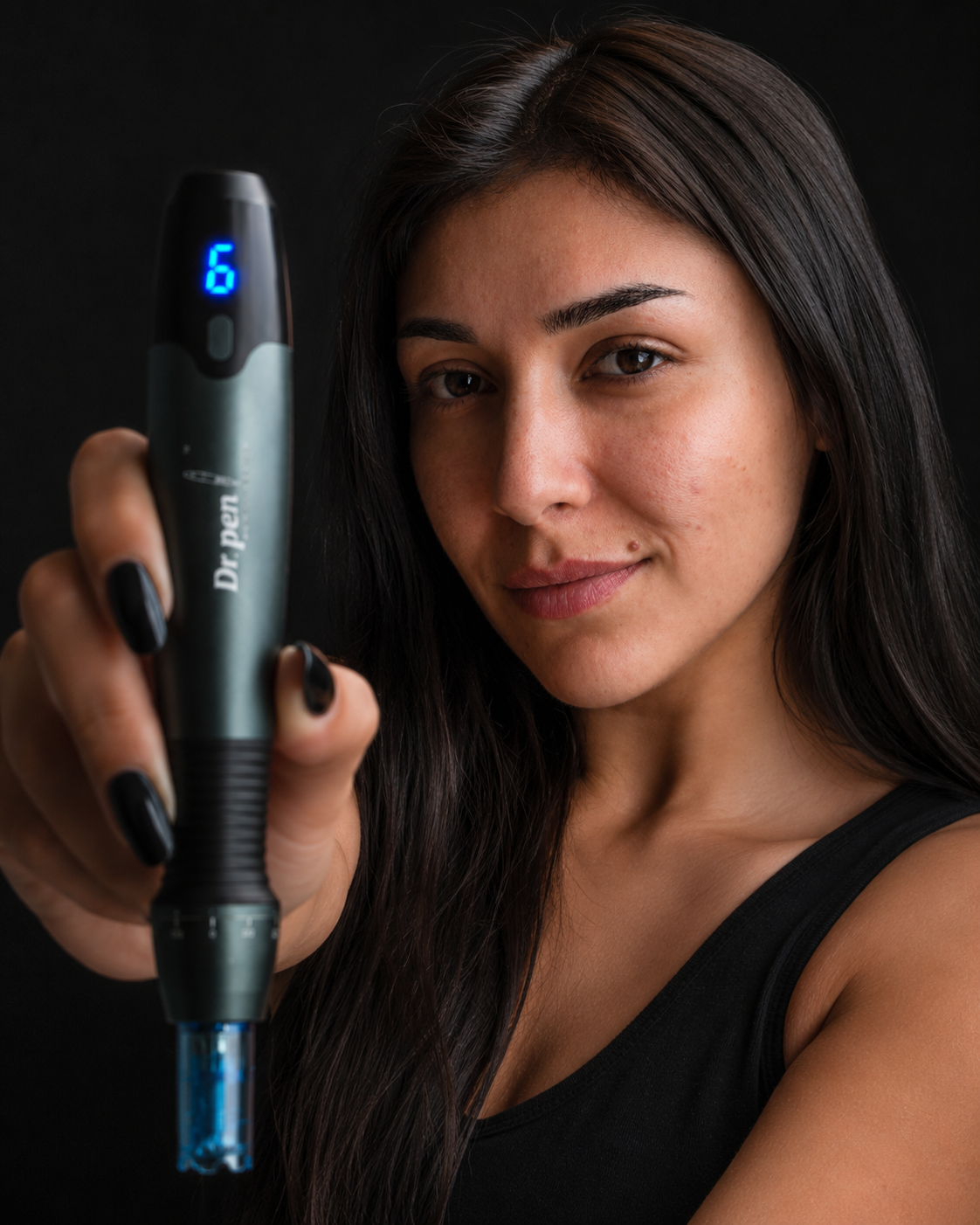
The dr pen auto microneedle system uses a motor to move a disposable needle cartridge rapidly up and down. Those repeated movements create small punctures in the skin, which can trigger a wound-healing response. The pen automates the needle movement, but it does not decide whether treatment is appropriate, select safe settings or control the operator’s technique.
Understanding that distinction makes the device easier to evaluate. The motor, cartridge and adjustment controls each have a different job, and none works safely in isolation. This guide explains the mechanics, what speed and depth settings actually change, how the A11 and A10 fit into the product family and which checks matter before use.
What “auto” actually means
In an automated microneedling pen, an internal drive mechanism converts motor movement into repeated, back-and-forth needle motion. The cartridge holds the needles together so their tips extend beyond its face and retract as the mechanism cycles.
This differs from a manual dermaroller, where needles enter and leave the skin as a cylindrical roller turns. A pen produces repeated stamping movements while the operator positions and moves the handpiece according to its instructions.
The automation is limited to that mechanical action. A dr pen auto microneedle system does not automatically assess skin thickness, recognize an inflamed area or stop when an unsuitable setting has been selected. The operator still determines placement, movement, pressure and treatment suitability.
Automatic needle movement is not the same as automatic treatment. A device can run consistently while being used incorrectly. That is why training, the exact model’s instructions and a suitable cartridge matter as much as the motor itself.
The components and what each one controls
Although individual models differ, the basic system separates the reusable handpiece from the disposable needle cartridge. The handpiece provides power and movement; the cartridge contains the components that contact and puncture the skin.
| Component | Main function | What it does not establish |
|---|---|---|
| Motor and drive mechanism | Produce repeated needle movement | Whether treatment is appropriate for a particular person |
| Compatible needle cartridge | Hold and guide the needle assembly | Compatibility with every Dr. Pen model |
| Depth adjustment | Set how far needle tips extend beyond the cartridge face | An identical penetration depth across every skin area |
| Speed control | Change the rate of needle movement | A universally safe or effective treatment intensity |
| Controls and display | Help the operator select or view settings, depending on the model | Correct technique or a predictable result |
When researching a dr pen auto microneedle system, check these components against the exact model rather than relying on a generic product photograph. Similar-looking pens can have different controls, cartridge connections and operating instructions.
The cartridge is especially important. Needle count, needle arrangement and connection design can vary. A cartridge that resembles the original is not necessarily a verified replacement, and a shared brand name does not establish cross-model compatibility.
Speed, depth and pressure are different variables
These three variables are often treated as interchangeable measures of “strength.” They affect different parts of the procedure, however, and increasing one does not reliably compensate for another.
Speed changes the rate of needle movement
A speed setting changes how frequently the needle assembly moves. It does not directly select needle depth.
The number of punctures delivered to an area also depends on how the operator moves the pen and how long the device remains over that area. Consequently, two sessions using the same speed setting can expose the skin to different amounts of needling.
Higher speed is not automatically more effective. The appropriate setting depends on the device’s instructions, treatment plan and trained operator’s assessment, not simply on choosing the highest number available.
Depth sets needle extension, not a guaranteed tissue measurement
The depth adjustment changes how far the needle tips can project beyond the cartridge face. Actual penetration also depends on contact, skin characteristics, location and handling.
For a dr pen auto microneedle system, the displayed or selected depth should therefore be understood as a device setting, not proof that every needle reaches precisely that distance in living tissue.
Pressure is a separate variable. Pressing harder is not a reliable way to improve results and can increase trauma. Neither redness nor pinpoint bleeding should be treated as a target to pursue without a clinician-directed protocol.
What happens in the skin after needling
The mechanical action creates small injuries. The skin then responds through overlapping phases of inflammation, repair and tissue remodeling. During that process, collagen production and organization can change, which is part of the rationale for treating certain scars and wrinkles with appropriate microneedling devices.
The pen initiates the injury; the body performs the repair. That distinction explains why results are not immediate and why the appearance directly after treatment is not a reliable measure of the final outcome. Early swelling or redness can temporarily change how skin texture looks.
A dr pen auto microneedle system cannot guarantee a particular amount of collagen production or a specific cosmetic result. Outcomes depend on the concern being treated, suitability, technique, recovery and the treatment plan.
Creating microchannels also does not make every skincare product appropriate for use during treatment. Products formulated for intact skin may cause irritation or other adverse reactions when the skin barrier has been disrupted.
How the A11 and A10 fit into the system
The basic motor-and-cartridge principle does not tell you which model is the right purchase. Controls, handling and verified replacement-cartridge availability are more useful comparison points than the word “automatic.”
The Dr. Pen A11 Microneedling Pen features a large LED control screen and comes with a power induction stand. Those are relevant details when comparing the interface and equipment setup. A readable screen can help an operator review settings, but it does not determine which settings are appropriate.
The Dr. Pen A10 Microneedling Pen is positioned around power, control and precision. That positioning should not be interpreted as permission to use more aggressive settings or attempt treatment of deep scars without professional assessment.
When comparing a dr pen auto microneedle system, identify the exact model first, then confirm its instructions and compatible cartridges. If regulatory status is part of your decision, review the Dr. Pen A20’s model-specific product information separately. Clearance associated with one model does not automatically extend to other pens in the range.

Checks that matter before the motor starts
Understanding the mechanism is useful, but it is not a substitute for assessing whether the device should be used. The FDA’s guidance on microneedling devices describes risks including bleeding, bruising, redness, infection and pigment changes. It recommends seeking an appropriately trained healthcare provider and states that it has not authorized microneedling medical devices for over-the-counter sale.
Verify the cartridge and its packaging
Use only a cartridge confirmed as compatible with the exact pen model. Check the packaging, expiration information where supplied and manufacturer instructions. Do not use a cartridge if its sterile barrier is damaged or its identity is uncertain.
Needle cartridges are single-use items. Cleaning, soaking or wiping a used cartridge does not restore its original sterile condition. Reusing one also introduces concerns about needle damage and cross-contamination.
The reusable handpiece needs its own cleaning and maintenance process. Follow the model-specific instructions rather than assuming that replacing the cartridge makes the entire device clean.
Separate room setup from clinical suitability
Good visibility helps with checking packaging, identifying controls and inspecting equipment. For a clinic room that also needs ambient fixtures, BUYnBLUE’s customizable pendant lighting is one furnishing option, but decorative lighting is not a substitute for suitable task illumination. A well-lit room is not necessarily a clean treatment environment, either.
Before using a dr pen auto microneedle system, a qualified provider should assess factors such as active skin infection, irritated areas, healing problems and relevant medications. An online guide cannot establish personal suitability or supply a universal depth, speed or treatment schedule.
Frequently asked questions
Does “auto” mean the pen chooses the settings? No. It refers to motor-driven needle movement. Unless the exact manufacturer documentation describes an additional function, do not assume the pen assesses skin or selects treatment parameters.
Does every Dr. Pen cartridge fit every model? No. Compatibility must be confirmed for the exact model and cartridge. Similar appearance, needle count or brand labeling is not enough to establish a correct fit.
Are nano cartridges the same as microneedling cartridges? No. Their tip design and intended action differ. The guide to nano needles for Dr. Pen explains those distinctions. A nano attachment should not be treated as interchangeable with a needle cartridge used for collagen-induction procedures.
Does a higher setting produce better results? Not necessarily. Higher speed, greater needle extension and additional pressure affect treatment differently. Increasing them without an appropriate protocol can increase injury rather than improve the outcome.
Does FDA clearance apply to the entire brand? No. Clearance concerns a specific device and its stated indications and conditions of use. Check the exact model’s regulatory information rather than applying one product’s status to all Dr. Pen devices.
Choosing a dr pen auto microneedle system
Start with the exact model, its intended use and the availability of verified compatible cartridges. Then compare the controls and handling features that matter to the intended operator.
For the A11 or A10, review the linked product information and ask Dr. Pen Store’s support team to clarify cartridge compatibility before ordering. Treatment suitability and clinical settings belong with a qualified healthcare provider, not a product comparison alone.