

Choosing the best microneedling pen for professional use in a mobile practice means evaluating more than needle adjustments and portability. Your device must fit your professional scope, the treatment location, an infection-prevention workflow and a dependable supply of compatible sterile cartridges. A lightweight pen is not a good purchase if you cannot legally use it at the destination or maintain its required operating conditions.
For a US mobile practice evaluating Dr. Pen devices, the A20 is the logical starting point for documentation review. Dr. Pen Store identifies it as FDA 510(k)-cleared. Before purchasing, confirm the exact device identity, cleared indications, intended user and instructions, then establish whether your license and proposed treatment setting permit its use.
This guide compares purchasing considerations rather than reporting hands-on testing. It separates features worth investigating from requirements that should stop a purchase altogether.
What makes the best microneedling pen for professional use mobile-ready?
A mobile device must work as part of a complete treatment system. Evaluate the pen, cartridges, protective barriers, cleaning requirements, transport arrangements and support together.
| Purchase requirement | What to verify | Mobile-practice implication |
|---|---|---|
| Regulatory documentation | Exact model, manufacturer, intended user and indications | Marketing language alone is insufficient |
| Cartridge supply | Specified compatibility, sterility, expiration and single-use labeling | Carry enough sealed stock for the planned schedule |
| Power arrangements | Documented runtime, charging requirements and permitted operating modes | Route planning must accommodate charging or approved backup arrangements |
| Cleaning instructions | Compatible cleaning products, barriers and contact times | Appointment spacing must allow the full turnover process |
| Transport limits | Storage temperature, moisture protection and handling instructions | A parked vehicle may not provide acceptable storage |
| Service support | Warranty terms, troubleshooting and repair arrangements | Device downtime can disrupt several off-site appointments |
Apply these as pass-or-fail checks before considering convenience features. A higher maximum speed does not compensate for uncertain cartridge provenance or a treatment room that cannot support safe practice.
Compare platforms without assuming they are interchangeable
Selecting the best microneedling pen for professional use requires comparing exact devices, not brand names alone. Clearance, compatible consumables and operating instructions do not automatically carry across a manufacturer's entire range.
Dr. Pen A20: the first Dr. Pen model to investigate
The Dr. Pen A20 deserves an early place on a US professional shortlist because of its FDA-cleared positioning. Request documentation identifying the specific device and its applicable indications rather than relying on a retailer badge or a general statement about the brand.
For mobile work, also request its operating manual, cartridge specifications and cleaning instructions. Confirm how the complete kit will be transported, whether your proposed power arrangement is permitted and what happens if the device needs service.
Clearance is an important purchasing consideration, but it does not establish that every practitioner, treatment area or off-site setting is authorized.
SkinPen Precision: a cleared comparator
SkinPen Precision is an FDA-cleared microneedling system and a relevant comparison point. Obtain the current labeling for the exact system offered and compare its indications, training arrangements, consumable requirements and service terms with your proposed Dr. Pen setup.
Do not assume one platform produces better outcomes merely because its purchase price is higher or its marketing is more familiar. A useful comparison needs matching treatment indications and credible evidence, not photographs taken under different conditions.
Dr. Pen M9 and other models: assess separately
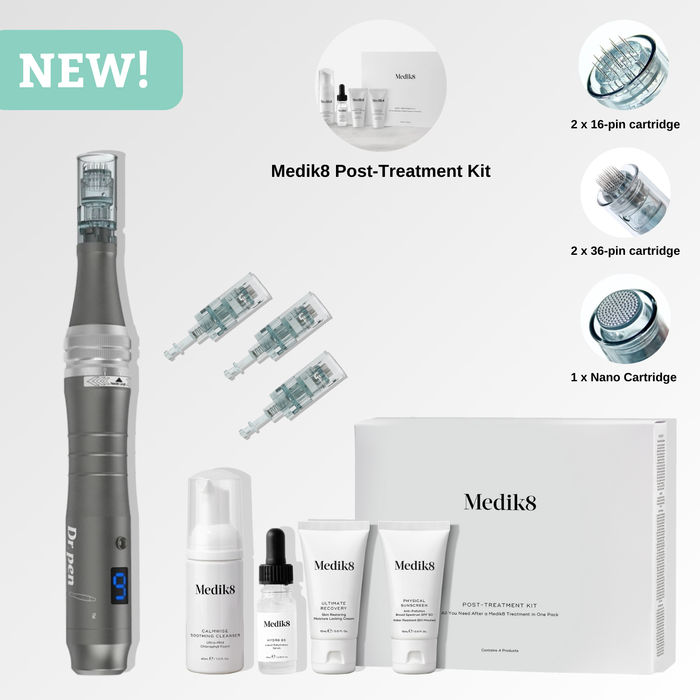
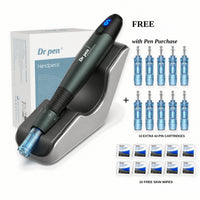
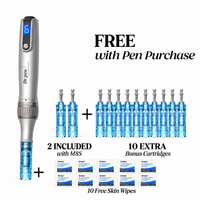
The Dr. Pen M9, M8S, A11, A8S and A10 may enter a buying shortlist, but each requires its own documentation review. Do not transfer the A20's clearance claim to another model.
The best microneedling pen for professional use is the one that passes your clinical and operational requirements, not necessarily the newest model. Compare exact cartridge references, maintenance requirements, support availability and permitted use before considering the apparent value of a bundle.
Bio Pen Q2: evaluate its additional modalities separately
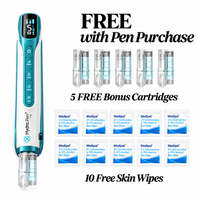
The Bio Pen Q2 By Dr. Pen Ems Led Micro Current Probe combines microneedling, EMS electroporation and LED light therapy. Its induction base stops the pen when it is set down and starts it when lifted.
That handling feature may be relevant to workstation planning, but it is not an infection-control measure. Assess the instructions, contraindications, training needs and regulatory position of each modality separately. A three-in-one description does not establish superior outcomes or permission to offer all three treatments under your license.
Check professional scope and the destination before buying
For a mobile business, the best microneedling pen for professional use must fit both the operator's credentials and the rules governing the treatment location. A device purchase or training certificate does not expand a professional license.
Requirements vary by state, profession, procedure and setting. An esthetics license alone should not be assumed to authorize medical microneedling. Depending on the jurisdiction and service, medical oversight, delegation arrangements or facility requirements may apply.
Before accepting bookings, obtain answers from the relevant licensing authority and your insurer. Confirm whether your proposed service is permitted in private residences, rented treatment rooms, salons or wellness venues. Also establish whether local requirements affect business licensing, waste handling or emergency arrangements.
The FDA's microneedling device guidance helps distinguish device authorization from broader marketing claims. FDA registration or device listing is not the same as clearance. Even clearance does not authorize every advertised application or treatment combination.
Separate clinical evidence from product claims
Check whether research concerns the exact device, a comparable device or microneedling generally. A study of one system does not automatically validate every pen, cartridge configuration or combined modality.
Useful evidence identifies the patient population, treatment indication, protocol, adverse events and follow-up period. Independent research can strengthen an assessment, but manufacturer-sponsored research should be evaluated on its methods rather than accepted or dismissed solely because of its funding.
For a structured documentation review, use the store's guide to evaluating a microneedle medical device before buying. Keep the resulting records with your procurement documentation.
Build the mobile workflow around infection prevention
The best microneedling pen for professional use should fit a workable clean-to-used workflow. Test that workflow in your proposed room layout before committing to a full appointment schedule.
Approve the room, not just the venue
Assess hand-hygiene access, lighting, privacy, cleanable surfaces, treatment positioning and space for separate clean and used supplies. Establish how interruptions, pets, children and unrelated activities will be excluded during treatment.
A wellness studio may have excellent sports and recovery equipment, yet still lack the handwashing access or suitable treatment surfaces your service requires. Judge the actual room against your professional requirements rather than assuming a fitness or wellness setting is appropriate.
Use the same site-approval standard for a familiar client as for a new commercial venue. If a room fails that standard, relocate or decline the appointment rather than improvising around the problem.
Protect sterile stock and control sharps
A sealed cartridge is not enough if its packaging is crushed, wet, expired or otherwise compromised. Inspect stock before departure and again before use. Follow the manufacturer's instructions for cartridge installation, barriers and cleaning of reusable components.
Keep sealed supplies separate from used equipment throughout the visit. Position an appropriate sharps container within reach before treatment and secure it for transport in accordance with applicable requirements. Do not reuse single-use cartridges, including on the same client at a later appointment.
Where staff have occupational exposure, applicable OSHA bloodborne pathogens requirements also need to be addressed. These can include an exposure-control plan, training and arrangements for responding to an exposure incident.
Allow time for departure and turnover
Your appointment duration includes setup, screening, consent, treatment, aftercare, cleaning, waste handling and packing. Travel time comes on top of that. Do not shorten a required disinfectant contact time because the next client is waiting.
Document cartridge lot details and device identity in a way that supports traceability. Keep clinical records secure when moving between sites, with an approved alternative if internet access is unavailable.

Test transport, power and support before the first booking
Cordless operation can reduce cable management, but it does not prove that a device will support a full mobile schedule. Obtain documented runtime information and distinguish it from the treatment time achievable under your actual operating conditions.
During an authorized pre-service equipment check, confirm the charging process, indicators, permitted accessories and response to a low-power condition. Do not assume a pen can operate while charging or accept an alternative power supply unless its instructions allow it.
When comparing the best microneedling pen for professional use, include the downtime plan. Ask who handles faults, which information support needs and what warranty conditions apply to professional use. Confirm whether any replacement or loan arrangement actually exists rather than building your schedule around an assumption.
Transport deserves the same scrutiny. Follow the stated storage limits, protect the device from impact and prevent pressure on controls or connections. Plan to remove supplies from the vehicle when temperature conditions could exceed their permitted range.
A backup device is useful only if it is independently suitable, maintained and ready for use with its specified supplies. Otherwise, the safer operational plan may be to reschedule.
Calculate cost per completed appointment
The purchase price is only one part of ownership. Compare costs using the same expected workload, then account for device-specific consumables and the realities of travel.
A practical calculation is:
Cost per completed appointment = allocated equipment cost + consumables + labor + travel + allocated overhead.
For illustration only, a hypothetical $600 device spread across 200 completed appointments contributes $3 per appointment before cartridges, supplies or labor. These figures are not Dr. Pen Store prices. If the device completes only 100 appointments before replacement, that equipment allocation becomes $6.
The best microneedling pen for professional use should remain financially workable after you include cancellations, cleaning time and service interruptions. Cheap cartridges are not a saving if their authenticity, sterility or compatibility cannot be established.
Compare these categories when requesting quotes:
- Initial setup: Device, required accessories, suitable transport protection and training.
- Per-appointment supplies: Specified sterile cartridges, barriers, protective equipment and cleaning materials.
- Mobile operations: Travel, parking, setup time, waste arrangements and recordkeeping.
- Business continuity: Maintenance, repairs, replacement planning and lost appointments during downtime.
Do not infer cartridge compatibility from photographs or a similar model name. Confirm the exact reference against the device instructions and supplier information, then check reliable availability before committing to a platform.
Request a complete pre-purchase evidence pack
Ask for enough information to approve the entire system, not just the pen. The evidence pack should identify the manufacturer and exact model, relevant regulatory documentation, current instructions, specified cartridges and applicable training requirements.
It should also explain authenticity verification, warranty coverage, returns conditions and the support route for faults. Distinguish supplier support from clinical training: help with a charging problem is not supervision for patient selection or treatment complications.
Before selecting the best microneedling pen for professional use, resolve any mismatch between the product page, packaging and documentation. A seller's inability to explain a model identifier or compatible cartridge reference is a reason to pause the purchase.
Finally, build a sample mobile appointment on paper. Assign time and responsibility to every step, from room approval to waste transfer. That exercise often exposes a missing supply, an unrealistic route or a support dependency that a specification sheet does not reveal.
Frequently asked questions
Is SkinPen or Dr. Pen better for a mobile practice? Compare exact models rather than brands. SkinPen Precision and the Dr. Pen A20 are relevant starting points for a clearance-focused review, but documentation, permitted use, consumables and mobile workflow determine suitability. This guide does not establish clinical superiority for either.
Can an esthetician buy a professional microneedling pen? Being able to purchase a device does not establish permission to perform the procedure. Verify your state-specific scope, any supervision or delegation requirements and whether the proposed location is permitted before offering treatment.
Is a cordless pen essential? No. The appropriate power arrangement depends on the instructions and treatment environment. Cordless convenience must be weighed against runtime and charging needs, while a corded setup requires suitable electrical access and cable management.
Can I use the same cartridge for a returning client? No. Single-use cartridges must not be saved for another appointment, even for the same person. Use a new compatible sterile cartridge and follow the device instructions for every treatment.
Start with documentation, then choose the device
The best microneedling pen for professional use in a mobile practice is one you can legally operate, safely transport and consistently support with the correct supplies. Start your Dr. Pen review with the linked A20 information, then request the documentation and cartridge details needed for your proposed service.
Before ordering, ask Dr. Pen Store to confirm exact model identity, authenticity verification, compatible cartridges and support terms. Purchase only after those answers align with your professional obligations and mobile workflow.