

A microneedling pen with led light may add value, but only if the light has a defined treatment purpose and documented output. A glowing tip or an LED display alone does not establish a skin benefit. Before paying extra, separate three things: the pen’s needling performance, the light’s technical specifications and the evidence supporting their combined use.
For most buyers, cartridge quality, authenticity and appropriate professional supervision deserve more attention than the number of light colors advertised.
First, distinguish an LED screen from treatment light
Product descriptions use “LED” for features that do different jobs. An LED control screen displays information about the device’s settings. A light near the cartridge might illuminate the working area. A therapeutic light source is intended to deliver a defined light exposure to skin. These are not interchangeable features.
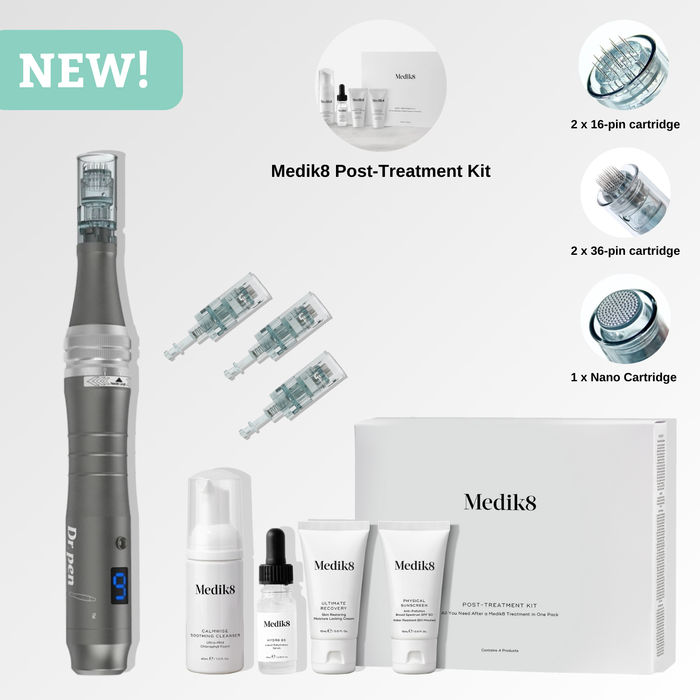
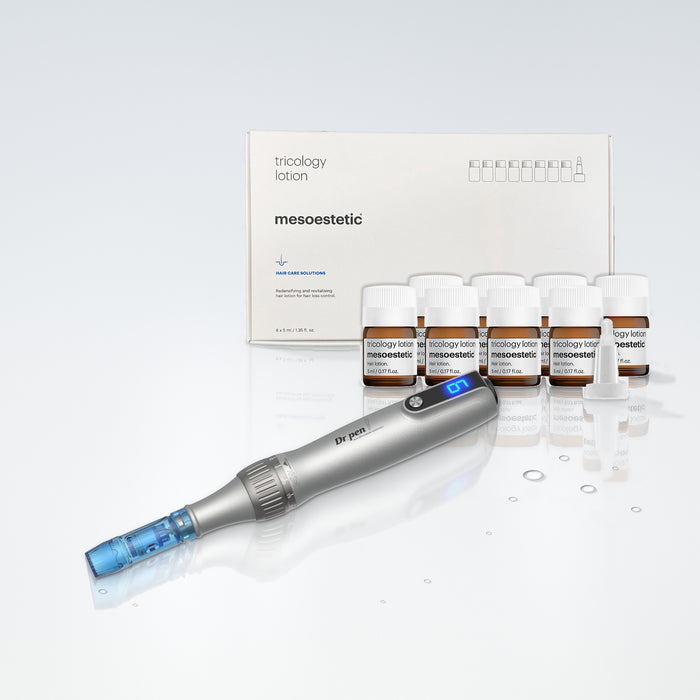
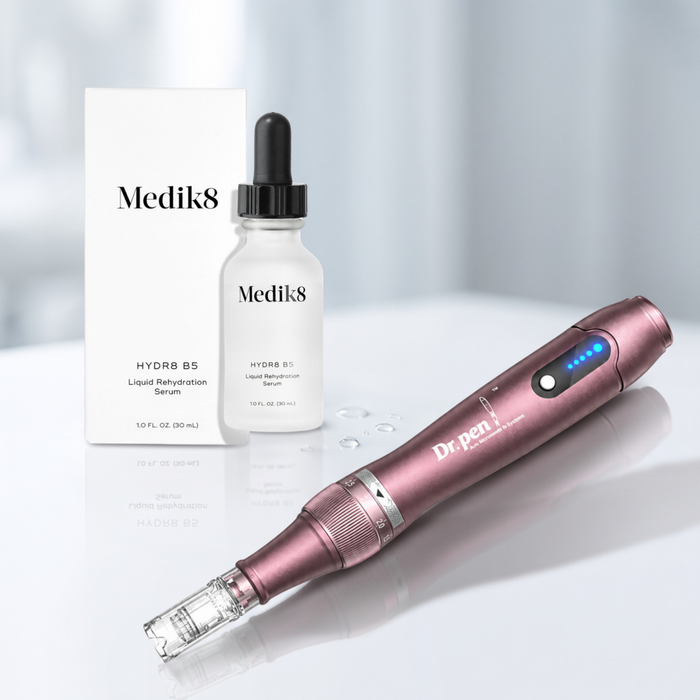
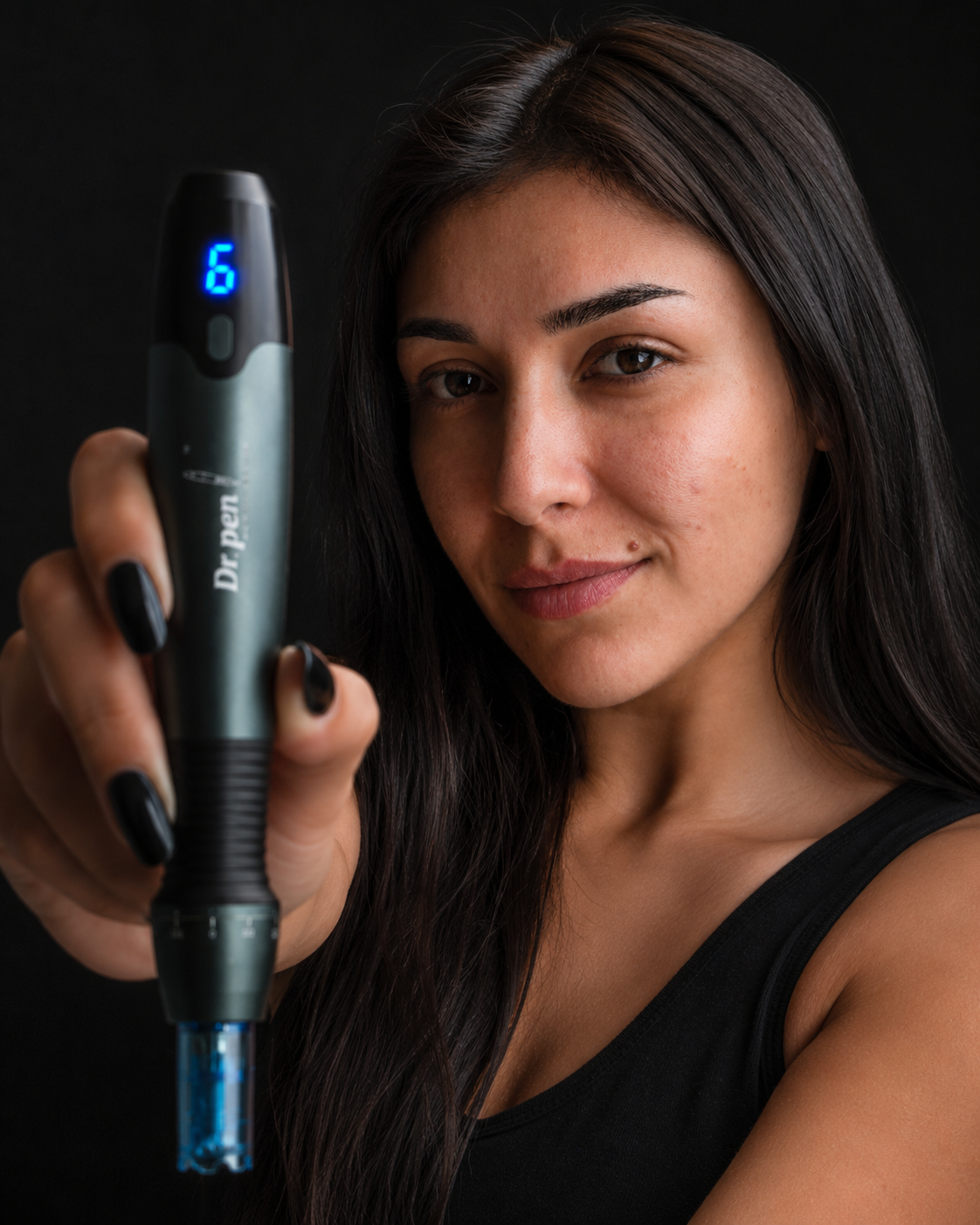
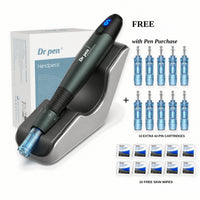
The Dr. Pen A11 Microneedling Pen, for example, is described as having a large LED control screen and a power induction stand. Those are relevant features when comparing controls and device setup. However, an LED screen is not evidence that a pen delivers red-light therapy.
When reading any listing, look for language that identifies where the light goes and what it does. “LED display,” “illuminated tip” and “red-light treatment” should not be treated as equivalent claims. If a seller only mentions a screen, do not assume there is a skin-treatment light built into the cartridge area.
Does a microneedling pen with led light improve results?
Microneedling and light-based treatment work differently. Microneedling creates controlled punctures in skin. Photobiomodulation uses light under specified conditions to influence biological responses without intentionally heating or puncturing tissue.
There is a scientific basis for investigating red and near-infrared light in skin care. A review of low-level light therapy in skin describes potential applications and the importance of treatment parameters. That research does not validate every consumer device containing a red LED.
The distinction matters because evidence has several levels:
- Research on light therapy in general does not prove a particular pen delivers an effective exposure.
- Research on a standalone light device does not automatically apply to a small moving LED ring.
- Evidence that microneedling works for a concern does not prove that adding light improves its outcome.
The strongest support would be research comparing the same needling protocol with and without the specific light feature. Without that comparison, claims such as “faster recovery” or “better collagen production” remain unproven for that combination.
A plausible mechanism is a reason to investigate a feature, not a reason to assume it is worth a premium.
The light specifications that make a claim testable
To evaluate a microneedling pen with led light, ask for more than a color name. A useful specification explains what reaches the skin, over what area and for how long.
| Specification | What to look for | Why it matters |
|---|---|---|
| Wavelength | A value in nanometers, not just “red” | Color alone does not identify the light precisely |
| Irradiance | Power per area at the treatment surface, usually mW/cm² | This describes how much optical power reaches an area of skin |
| Exposure time | Time each skin area receives light | Total appointment time may differ from local exposure |
| Light dose | Energy per area, commonly J/cm² | Dose depends on both irradiance and time |
| Treatment geometry | Distance, illuminated area and uniformity | A moving ring and a stationary panel expose skin differently |
| Supporting evidence | Research on the device or a clearly matched protocol | General light-therapy claims are not device-specific proof |
For continuous, steady illumination, dose can be calculated from irradiance multiplied by exposure time. As an arithmetic example, 10 mW/cm² for 300 seconds equals 3 J/cm². This is not a treatment recommendation and says nothing by itself about effectiveness or suitability after needling.
A moving pen complicates that calculation because each patch of skin may receive only brief, uneven exposure. Pulsed output introduces another variable. Electrical wattage, brightness in a photograph and the number of LEDs cannot substitute for measured output at the skin.
If those details are unavailable, treat the benefit as unverified rather than assuming it matches a dedicated light treatment.
Integrated light versus a separate LED device
An integrated light offers convenience: one device, fewer items to position and potentially less setup. Convenience can be useful, particularly in a professional workflow. It is not the same as a demonstrated improvement in treatment results.
A separate light device allows the practitioner to assess its coverage and exposure independently of the pen’s movement. However, it still needs appropriate specifications, eye-safety instructions and a protocol suitable for recently treated skin. A larger device is not automatically better or appropriate for immediate post-treatment use.
With a microneedling pen with led light, ask whether the light operates during needling, afterward or in a separate mode. Then ask how that arrangement delivers the exposure claimed by the manufacturer. A study using a stationary light for several minutes cannot simply be used to justify a moving light that passes over each area briefly.
For buyers who already own a suitable light device, paying for an integrated feature may duplicate equipment. For buyers without one, a combined pen is not necessarily an equivalent replacement. Compare documented capabilities rather than assuming that two functions in one housing provide two fully supported treatments.
Put the pen’s core features ahead of the light
Before comparing lighting options, establish whether the underlying pen is appropriate for its intended setting. Check genuine product verification, compatible sterile single-use cartridges, clear instructions and dependable access to replacements. Controls and maintenance requirements also affect practical ownership.
The store’s guide to choosing a professional microneedling pen provides a broader framework for those decisions. Light should be a secondary comparison, not a reason to overlook unclear cartridge compatibility or missing documentation.
Regulatory status is another separate check. If you are considering the FDA-cleared A20 offering, review the Dr. Pen A20 product information and verify the exact device labeling, intended use and operator requirements. Clearance associated with one model does not automatically extend to another model or an added light function.
A microneedling pen with led light deserves a price premium only when its additional capability is documented and useful to your intended workflow. If the seller cannot explain the light’s output or supporting evidence, compare the pen as though that feature adds no proven therapeutic benefit.

Can you use LED light after microneedling?
Sometimes a clinician may include an appropriate light treatment after microneedling, but the timing and settings should come from a device-specific professional protocol. “Noninvasive” does not mean every light device is suitable for freshly treated skin.
The FDA’s guidance on microneedling benefits, risks and safety states that it has not authorized microneedling medical devices for over-the-counter sale. An LED feature does not change that regulatory distinction or make skin-penetrating treatment suitable for unsupervised use.
Keep light treatment separate from basic safety
A microneedling pen with led light still requires appropriate infection-control practices and sterile single-use cartridges. Red or blue illumination is not a substitute for cleaning, disinfection or cartridge sterility, and a visible glow should never be interpreted as a sterilizing function.
Remove accessories that touch the treatment area before cleansing, including stainless steel necklaces and earrings. Water-resistant jewelry is not sterile and should be kept away from freshly treated skin and clean supplies.
Follow the light device’s eye-protection instructions, including for near-infrared output that may not be visible. Do not assume closing your eyes provides the protection specified by the manufacturer.
Know when to stop and seek advice
Do not needle over active acne lesions, infected skin or an unexplained rash. Discuss photosensitizing medications, recent procedures and relevant skin conditions with the treating clinician before adding light exposure.
Increasing pain, spreading redness, drainage or fever after treatment needs prompt medical assessment, not another session under a light. Neither a light attachment nor a reassuring device display can determine whether healing is proceeding normally.
Frequently asked questions
Does built-in red light improve acne scar treatment? Microneedling can improve selected atrophic acne scars, but that does not establish an added benefit from a built-in LED. Ask for research on the specific combination and scar type. Active acne and established acne scars also require different treatment decisions.
Is a microneedling pen with led light the same as radiofrequency microneedling? No. Radiofrequency microneedling delivers electrical energy through needles to heat tissue. LED treatment delivers light. The mechanisms, risks and equipment requirements differ, so a pen with visible LEDs should not be described as equivalent to an RF system.
Are more light colors better? Not necessarily. Each claimed treatment function needs an identified wavelength, suitable output and supporting evidence. A device offering several colors is not automatically more effective than one with a single well-characterized light source. Color count is a marketing specification, not a clinical outcome.
Can an LED control screen make a pen easier to use? A readable screen can make displayed settings easier to check, which is a practical interface benefit. That is different from improving skin outcomes through light exposure. Evaluate screen clarity as a control feature rather than treating it as a therapeutic capability.
The buying decision: pay for documented value
The most defensible reason to buy a microneedling pen with led light is a clearly specified light function that fits a suitable professional protocol. A colorful tip, a large screen or a general claim about red-light therapy is not enough.
When comparing Dr. Pen options, start with authenticity, cartridge compatibility, labeling and support. Then ask for the light’s wavelength, measured output and device-specific evidence. If those answers are missing, choose the pen on its core merits and leave the supposed LED benefit out of your value calculation.