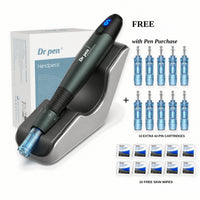
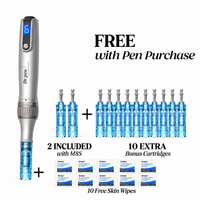

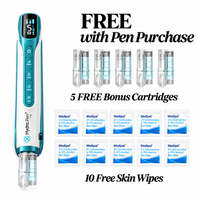

Storing a microneedling device at home means keeping the reusable pen clean, dry and protected without contaminating the unopened cartridges you will need next time. A zipped case helps organize equipment, but it does not sterilize a pen or make a used needle cartridge safe to reuse.
The basic arrangement is simple: keep the cleaned device, unopened cartridges and used sharps separate. Your model’s instructions take priority over general advice, particularly for cleaning products, drying, battery care and storage conditions.
Finish the session before packing anything away
Switch off the pen and disconnect its power supply before handling it as directed in the manual. Remove the used cartridge according to the manufacturer’s instructions, avoiding contact with the needles.
Single-use needle cartridges must not be saved for another session, even if only you used them. Rinsing, soaking or allowing a cartridge to dry does not restore its original sterile condition. Do not leave it attached to the pen inside the case.
Place used needle cartridges promptly into an appropriate sharps container. The FDA recommends an FDA-cleared container and explains how to dispose of used needles and other sharps. Follow local disposal requirements, and never leave loose cartridges in a drawer, recycling bin or household trash.
Where to store a microneedling device at home
Choose a dry indoor location with a stable temperature, away from direct sunlight, splashing water and heating appliances. A bedroom cabinet may be more suitable than a bathroom cabinet exposed to shower steam, provided children and pets cannot access it.
Follow any temperature or humidity limits stated in your manual. Do not assume that refrigeration improves hygiene, and avoid leaving the device in a parked car, on a sunny windowsill or beside a radiator.
Organize supplies so that clean equipment cannot come into contact with used treatment materials:
| Item | Between-session storage | Avoid |
|---|---|---|
| Reusable pen | Clean, fully dry and protected from movement | Damp case lining or a cartridge left attached |
| Unused cartridges | Original, intact individual packaging within the stated storage conditions | Loose cartridges or crushed pouches |
| Charging cable and adapter | Dry, neatly arranged and disconnected for storage | Tight bends or pressure against the pen |
| Used needle cartridges | Appropriate sharps container | Returning them to the storage case |
A closed case can protect against dust and accidental knocks. It should not squeeze controls, trap a damp cable against the pen or require you to force the lid shut.
Clean the pen without damaging it
Before putting a microneedling device at home back into its case, follow the cleaning instructions for that exact model. Do not borrow a cleaning method from another pen simply because the housings look similar.
Cleaning removes residue; disinfection reduces microorganisms under specified conditions. Neither means that a reusable pen has become sterile. If your instructions specify a disinfectant, follow the stated application method and contact time without allowing liquid into openings.
Avoid immersing the handpiece, spraying directly into the cartridge connection or flooding charging ports. Do not assume that every plastic, seal or finish tolerates alcohol, bleach or another household disinfectant. A product suitable for a countertop may damage an electronic device.
Allow the pen to dry completely as directed before closing the case. Do not pack it away with wet wipes, damp cloths or open skincare bottles.
Check the case as well as the handpiece
Inspect the lining and compartments for residue, moisture and loose debris. Clean the case only by a method suitable for its material, and let it dry fully before returning equipment.
If a porous insert becomes contaminated and cannot be cleaned according to its care instructions, ask the supplier about replacement. Placing a cleaned pen into a dirty insert defeats the purpose of cleaning it.
Keep unopened cartridges protected
Replacement heads need a different approach from the reusable handpiece. When organizing supplies for a microneedling device at home, leave each unused cartridge in its original sealed packaging until it is needed.
Check the label for the exact cartridge type, expiration date and any storage restrictions. Before use, inspect the sterile barrier for tears, punctures, moisture damage or an opened seal. A pouch can look tidy while still having a damaged edge.
Do not use a cartridge if its sterile packaging is compromised or its expiration date has passed. Putting it in a clean box, wiping the outside or using a household UV cabinet does not restore the manufacturer’s sterile barrier.
Keep packaged cartridges away from items that could puncture them. Store them where you can check labels without repeatedly bending or crushing the pouches, and keep the outer carton when it contains useful identification or storage information.
Separate different models and cartridge types
Label storage compartments by the full pen model and cartridge specification. This is especially helpful if your household owns more than one device or you keep several cartridge configurations.
Do not infer compatibility from a similar connector, a familiar brand name or a cartridge that appears to fit. Match the replacement to your exact model using the manufacturer’s documentation. If compatibility is uncertain, leave the package sealed while you confirm it with support.

Protect the battery, cable and controls
For rechargeable models, follow the manual’s charging and long-term storage guidance. Battery requirements can differ, so there is no single charging percentage or maintenance schedule that applies to every pen.
Keep the charging port dry and inspect the cable for damaged insulation or bent connectors. Use the power accessories specified or approved for your device. Do not charge inside a closed storage case, beneath towels or in another place that traps heat.
Long periods between sessions do not mean you should leave a microneedling device at home permanently connected to its charger. Follow its charging instructions, disconnect it for storage and position the pen so that the power button cannot be pressed accidentally.
If the device becomes unusually hot, develops swelling or has a damaged battery compartment, stop using and charging it. Contact the supplier or manufacturer for handling and disposal guidance rather than attempting a battery repair.
Inspect stored equipment before the next session
Storage is only one part of equipment hygiene. Before setting up again, check the pen, case and replacement cartridge rather than assuming everything remains ready because the lid stayed closed.
Look for moisture, residue around the cartridge connection, cracks, corrosion, unusual odors and damage to the controls or charging port. Confirm that the replacement cartridge is compatible, unopened and within its expiration date. Any operational checks should follow the manual, without exposing yourself to needles.
Do not continue with a session simply because you have already prepared your supplies. Equipment problems are a valid reason to pause, alongside the skin and health considerations covered in the guide to when to postpone a microneedling treatment.
If the pen gets wet or contaminated
If liquid enters a microneedling device at home, stop using it and do not charge it. Follow the manufacturer’s instructions and contact support before returning it to service. A dry exterior does not establish that internal components are safe.
If blood or treatment fluid reaches an area you cannot clean according to the instructions, do not improvise with deeper soaking, steam or stronger chemicals. Explain where contamination occurred and ask whether the device can be safely reprocessed or needs replacement.
Keep personal-use equipment assigned to one user. A fresh cartridge does not address every possible contamination route, as explained in the guide to the risks of sharing a microneedling pen at home.
Storage does not establish suitability for home treatment
Good storage cannot change a device’s intended user or treatment setting. The FDA’s microneedling guidance states that it has not authorized microneedling medical devices for over-the-counter sale. Availability online does not establish suitability for unsupervised use.
Check the labeling for your particular device and consult a qualified clinician about whether treatment is appropriate. This storage guide is not a treatment protocol or permission to use professional equipment without supervision.
Frequently asked questions
Can I leave a new cartridge attached between sessions? Keep an unused cartridge in its original sealed packaging until needed. Attaching it early removes that protection and creates an exposed sharp. Used single-use cartridges belong in a sharps container, not on the pen.
Does a storage case need to be airtight? Follow your model’s instructions. An airtight container is not a substitute for cleaning or sterile packaging, and closing any container around damp equipment can trap moisture. Prioritize a clean, dry case that protects the device from damage.
Should I disinfect unopened cartridge packaging? Follow the product instructions rather than spraying or soaking pouches. Liquids can damage packaging or labels. The package exterior is not sterile, and keeping it intact protects the sterile contents until opening.
How long can the pen stay stored? Use the manufacturer’s guidance for long-term storage and battery maintenance. There is no universal interval. Check cartridges separately because their expiration dates still apply while the pen is unused.
Keep the next setup straightforward
A well-organized microneedling device at home should be stored without an attached cartridge, fully dry and protected from damage. Unused cartridges should remain sealed, and used sharps should be completely separate.
When you need replacements, locate your exact model and its listed compatible cartridges at Dr. Pen Store. Confirm the specification before ordering, and ask support if you are unsure about compatibility, cleaning or storage requirements.